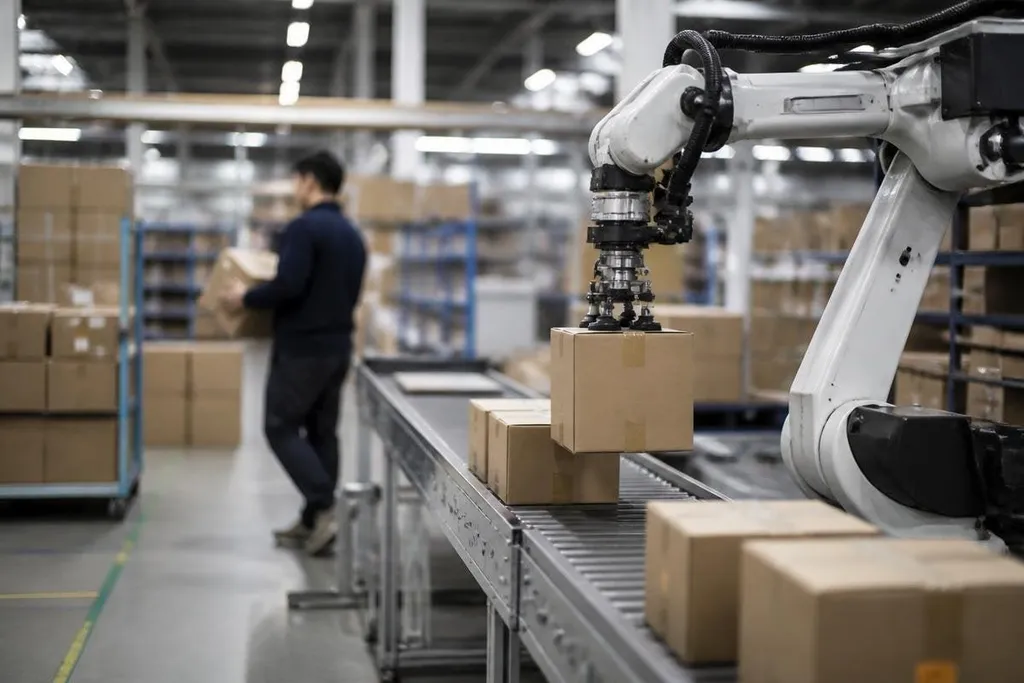
A robot that sorts parcels is handling objects. A robot that scans faces, follows workers, or decides who gets help is handling people’s rights. The difference sits in the camera feed, the software rules, and the person who can challenge the result.
This article looks at the main risks for companies building or buying AI systems with cameras, microphones, mobile bases, or robotic arms.
Quick read
- A robot can collect biometric data, location records, and workplace behavior without making a physical decision.
- A wrong system result can deny access, flag a person, or increase workplace pressure.
- Human review helps only when people can see the robot’s evidence and overrule it.
Where the risk starts
AI systems turn sensor input into a label or action. A camera may identify a face, a microphone may turn speech into text, and a mobile robot may record where a worker spends time. Each step creates data about a person.
That data can expose more than the task requires. A delivery robot may need a route map, but nearby faces could enter its video. A workplace robot may need obstacle detection, while its records also show breaks, movement, and conversations. The technical question is not only what the robot can collect. It is what the owner keeps, who can see it, and why.
Biometric data creates a sharper risk because a face or voice cannot be replaced like a password. A mistaken match can send a person to a security check, block entry, or place them under suspicion. The person affected may never know which image or system rule caused the result.
When a wrong result changes someone’s day
Robots can support decisions about hiring, access, safety checks, care, and work performance. The software may present a score, while a manager treats that score as a fact. That step can turn a prediction into a penalty.
Error rates also differ across people and settings. Lighting, camera angle, clothing, skin tone, age, disability, and speech patterns can affect what a system records or recognizes. A robot that works in a test room may produce a different result in a busy station with glare, noise, and blocked views.
Human review needs real power. A reviewer who can only accept the robot’s answer is adding a signature, not a safeguard. The person affected needs a clear reason, a way to correct bad data, and a route to appeal.
Workplaces need a higher bar
A mobile robot with a camera can map a warehouse while it moves. If the same records are used to rank workers, the robot has shifted from task support to worker surveillance.
That shift can change behavior even when nobody receives a formal warning. People may avoid breaks, limit conversations, or rush near moving equipment because they think the system is scoring them. Safety rules become harder to follow when speed records carry more weight than safe work.
A worker can’t judge that risk from the robot’s task list alone. Human rights reporting on robotics can place the machine’s data collection beside the rules that govern its use, including who can see the records and correct them.
Companies should separate safety data from performance data unless they have a clear legal and workplace reason to combine them. They should also tell workers what the robot records, how long records stay, and who can request a correction.
A practical review before deployment
Use this checklist before a robot enters a public space, care setting, or workplace:
- Name each sensor. List every camera, microphone, scanner, location signal, and contact sensor.
- Write the purpose. State the task each sensor supports and remove data that the task does not need.
- Set a short retention period. Delete raw video, audio, and location records when the stated task no longer needs them.
- Test varied conditions. Check lighting, noise, camera height, mobility aids, accents, and different body sizes.
- Give people a route to challenge results. Record who reviews an error, what evidence they can see, and how fast they must respond.
- Stop unsafe use. Add a physical stop, a software shutdown rule, and a named person with authority to halt the system.
This process also exposes a basic buying question: does the robot need to identify a person at all? If a system can complete the task with anonymous obstacle data, face recognition adds risk without adding useful control.
I'd reject any deployment where the owner cannot explain the data flow in one page and name the person who can stop the robot.
The next test for AI robotics is not whether a machine can act on its own. It is whether people can understand, challenge, and stop that action before a software error becomes a rights violation.